Revelation
Articles
Reflections on Revelation, its language, structure, and meaning.
The Plagues Written in This Scroll
The Greek word rendered “plague” means a blow — whatever strikes and brings harm. That breadth decides how the warning of Revelation 22:18 reads.


Righteous and True
Three times Revelation puts "righteous" and "true" together. Each time a different voice says it, and the three voices need not be the same company — but they do appear to be the same kind of speaker.

Scripture Should Be Open to Everyone
The oldest surviving copies of the New Testament are the closest thing we have to the text itself. The Center for New Testament Restoration puts that evidence in front of anyone who wants it, free — and it is the Greek source this study leans on most.

Does Revelation 14 Continue Chapter 13?
The mark on the forehead closes chapter 13, and a name on the forehead opens chapter 14. Joining them folds Jesus' two appearances in chapter 14 into one — but chapter 12 still has an appearing that will not move, so the joining buys nothing. What is left is two passes over the same seven years.

A Quick Guide to Studying Revelation's Greek Manuscripts
Where to look when you want to know what Revelation actually says — a short list of the tools worth your time, what each one is good for, and a few habits worth avoiding.

When “Voice” Means “Sound” in Revelation
The Greek word translated “voice” can identify speech, but it can also describe nonverbal or collective sound. Revelation 14:2 shows why the context must decide.

How to Approach Reading Revelation
Revelation is deeply patterned, and English cannot carry those patterns faithfully — you will see patterns that are not there and miss ones that are. Read it in English, but build conclusions on the Greek. This is how that works in practice, and why this study marks the text the way it does.

When the Beast, the False Prophet, and the Dragon Enter the Lake of Fire
Revelation places the Beast and the False Prophet together in the lake of fire at the conclusion of one climactic war, while the Dragon enters only after the thousand years.

The Earth Beast Is the False Prophet
Revelation identifies the Earth Beast as the False Prophet by repeating the same actions and relationships: signs performed before the Beast, deception through those signs, the mark, and worship of the image.

Who Is the Alpha and the Omega
Revelation 22:13 does not say who is speaking. The two verses around it are marked as Jesus, and translations settle the matter there. But three principal arguments and three supporting observations in the book itself point the other way — to the Father.

Who Sits on the Great White Throne
Revelation never names the one seated on the great white throne. But the book has its own settled way of speaking about thrones, and its language at 20:11 reaches back to a scene it has already given us. Read with Matthew 25 and John 5, the picture is coherent rather than crowded.

How Parentheticals Interrupt Seal, Trumpet, and Vial Plagues
The specificity, focus, and sequencing of the seal, trumpet, and vial plagues is the key indicator for noticing when a parenthetical section is present. Each plague holds to a single purpose, so when that focus breaks, the text has stepped out of the main line.

Shared Words Are Not Shared Events
Revelation repeats words on purpose, and the repetition invites comparison. But a shared word is an invitation to compare, not a license to merge. Two examples show the discipline - the "assemble" of Revelation's wars, and the "salvation" shouts around the war in heaven, where the text resists just enough to give pause.

The Cutting Short of Those Days
Jesus promised the unmatched tribulation would be cut short for the elect's sake, but He did not say how — and this study does not try to define the phrase. It uses it as a doorway to watch the progression - the tables turn at the sixth seal, turn fully at the seventh trumpet's reaping, and the white horse ends it.

The Great Day — From the Sixth Seal to the War
Revelation names "the great day" exactly twice — at the sixth seal, where the world announces its arrival, and at the vials, where the kings are assembled to its war. It is designated, never counted — a day that dawns as God's interruption and ends at "It is done."

The Three Comings of Jesus in Revelation
Jesus appeared to the disciples, to Paul, and to John long after the cross — "second coming" was never a cap on His appearances. Within Revelation's seven years the text shows Him four times, and the book's own details resolve them into three comings - at the beginning, at the reaping, and at the end with the armies of heaven.

The Tribulation, the Great — What It Means
Revelation 7:14's Greek does not say "great tribulation." It says "the tribulation, the great" — a definite, emphatic phrase in a pattern Revelation repeats. Matthew 24:21 carries no "the" at all. Two books, two settings, two vocabularies — and a shared phrase that cannot by itself make them one event.
Why This Study Reads Revelation as Future
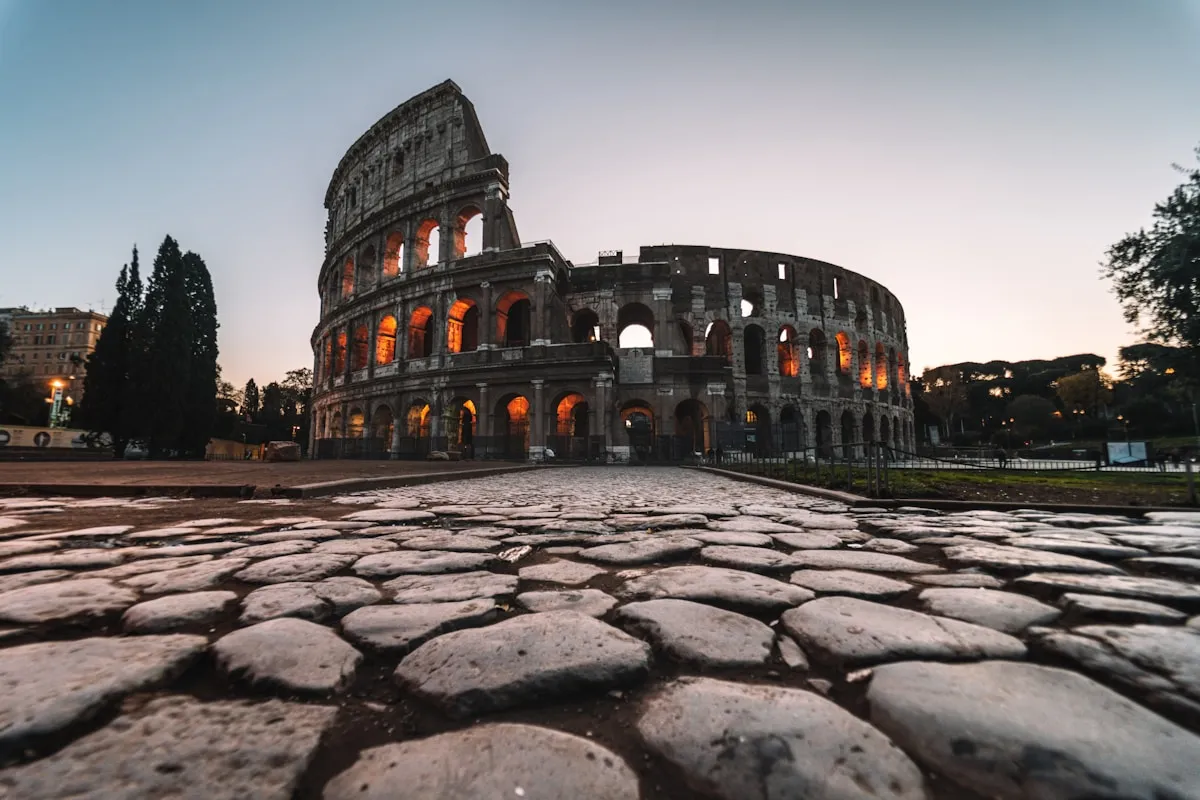
Before a single symbol is interpreted, every reader decides where Revelation sits in time. This study reads chapters 4-22 as future — on Jesus' own framing, the book's unbroken sequence, the weight of the historical witness, and the convergence of Daniel, Jesus, Paul, and John.

Time, Times, and Half a Time — Bounded, Not Counted
Revelation counts its days and months with precision, yet the woman's second span is left as "a time, and times, and half a time." The bounds of that span are knowable from the book's own counts. The exact length is deliberately withheld — and Matthew 24 explains why.

Why the Thousand Years Should Be Read as a Thousand Years
Revelation treats numbers, ordered series, and time markers with precision, and its own details answer the strongest objections. That matters when Revelation 20 repeats the thousand years six times.

The Day of the LORD as a Prophetic Category
The day of the LORD is not merely one isolated future timestamp. Scripture uses it as a prophetic category for the LORD’s decisive intervention in judgment, wrath, deliverance, or vindication.

The Locust Army in Revelation 9 and Joel 2
The locust army in Revelation 9 should not be simply identified with the army in Joel 2. The passages share imagery, but the differences in origin, king, target, and effect are too significant to ignore.

The Human Desire to Simplify Eschatology
Prophecy should not be flattened just because we want it to be simple. The first coming of Jesus warns us that true prophetic fulfillment can carry more timing, order, and detail than interpreters expected.

Would God Send Christ's Bride Into the Tribulation?
The question of whether God would let Christ's bride face tribulation should be answered from Scripture, not emotional pressure. Revelation itself shows faithful saints enduring the beast, refusing his mark, and being made worthy only by the blood of the Lamb.

Hell, the Abyss, and the Lake of Fire in Revelation
Revelation does not treat Hell and Death, the bottomless pit, and the lake of fire as the same thing. Each has its own context, function, and sequence in the book.

The Rapture, the Catching Up, and the Gathering
The word "rapture" comes through Latin, but Scripture itself speaks of a catching up in 1 Thessalonians 4 and a gathering in other passages. Labels can be useful, but they should not flatten distinct wording into one assumed event.
Escape from God's Judgment Is Biblical
The Bible does not avoid the language of escape. Saints should expect tribulation, but Scripture also distinguishes persecution from God's judicial wrath and repeatedly shows God providing a way out of judgment.

John the Apostle Wrote Revelation
Early Christian testimony identifies John the Apostle as the writer of Revelation. We should be honest about historical limits, but also honest about what the surviving record actually says.

The Nuance of Events in Revelation
Revelation often returns to the same end-time realities from more than one angle. The repetition matters, but so do the details inside each description.
Revelation: Is It Literal or Symbolic?
Revelation should not be flattened into a rule that everything is literal or everything is symbolic. The book itself uses both symbols and concrete particulars, and the safer path is to let the text explain itself.

The Day of the Lord and the Coming Like a Thief
The phrase “the day of the Lord” and the phrase “coming like a thief” should not be collapsed into one technical label for a single prophetic event.

A Prophetic Pattern: Revelation Written After the Fall
Like Daniel before him, John records end-times revelations after the Temple’s destruction. With the fall of Jerusalem in A.D. 70 behind him and early testimony placing Revelation near A.D. 90, the timing reflects a clear pattern: prophetic unveiling follows covenant judgment, pointing forward to God’s final purposes.

Wondering About "The Rapture"?
Prophecy never titles any event "the rapture." Instead, it shows events that require interpretation — and Revelation draws striking parallels to one of them in Luke 12:36.

Who Are the Stars of the Churches?
Are the seven stars in Revelation 1 angels or human leaders? The biblical pattern of prophetic communication and the function of the letters point toward earthly messengers entrusted with the gospel.

Why We Say "Mystery Babylon"
The Greek of Revelation 17:5 probably reads "a mystery — Babylon the Great," not "Mystery Babylon" as a compound title. But as shorthand for distinguishing the Revelation 17 Babylon from every other Babylon in Scripture, the label works.

The Hidden Speaker in Revelation 18:4
Who speaks in Revelation 18:4? A single voice claims covenant authority over "my people" and then refers to God in the third person — a combination that fits Christ's speech throughout the book.

Mystery Babylon and Jerusalem — Two Cities, Two Judgments
At the end of Revelation 16, "the great city" splits into three parts, and "great Babylon" comes into remembrance before God. Then chapters 17–18 open with a detailed portrait of Babylon as the woman riding the beast. The connection is real, but the judgments should not be collapsed into one flat city-event.

Why I Made the URV
The URV is not an official translation. It is a personal effort — a study text I built because nothing else gave me what I needed to work through Revelation carefully.

The Strong Messenger and the Scroll
The strong messenger of Revelation 10 swears a divine oath, wears God's rainbow, roars like a lion, and gives the prophet a scroll to eat. Four converging lines of evidence point to a single identification — and it is not an angel.

When Does Time End?
Revelation 10:6 declares that there should be "time no longer." But the Greek word used there is not about the cessation of time itself — it is about the end of a season. Specifically, the season of waiting that began in Revelation 6:11, when the martyrs were told to rest "a little season" until judgment came. That season ends at the seventh trumpet.

Parenthetical Sections in Revelation
Revelation moves between its main narrative and parenthetical material with such skill that the transitions can be easy to miss. Recognizing these structural shifts resolves apparent contradictions and reveals a more coherent narrative framework.